StudentAid
Unit 9: Diseases And Immunity — Long Questions
10th Class Biology · Unit 9: Diseases And Immunity
The human body is a complex system designed to maintain health and function despite constant exposure to potential threats. These threats come in various forms including microorganisms, genetic disorders, environmental influences and lifestyle choices.
Key Points
Diseases | Basic types of Diseases
1. Introduction: Disease is defined as a specific condition that affects the normal functioning of the body or mind. It covers a wide range of conditions which affect various body systems.
a. Examples: Examples of diseases include infections, metabolic disorders, autoimmune diseases, and genetic disorders.
b. Illness: The term "illness" means the subjective experience of being unwell due to disease. This includes individual's perception and response towards their health condition.
2. Basic Types of Diseases
a. Infectious diseases
b. Non-Infectious diseases
c. Zoonotic diseases
d. Vector-Bone diseases
Key Points Infectious Diseases | Common Pathogens
Infectious Diseases (Infections)
a. Definition: These are the communicable diseases (can spread from person to person or from the environment to person).
b. Causes: Infectious diseases result from harmful organisms (pathogens) entering the body.
c. Common Pathogens: Common pathogens include viruses, bacteria, fungi, parasitic protozans (e.g., Plasmodium) and worms (e.g., tapeworm). Infectious diseases spread from person to person, through contaminated food, water, or bug bites.
d. Examples
i. Viral Infections: Hepatitis, flu, dengue, measles, HIV, and COVID-19
ii. Bacterial Infections: Typhoid, strep throat, cholera, tuberculosis.
iii. Fungal Infections: Candidiasis (yeast infection).
iv. Infections by Parasitic Protozoan: Malaria, Amoebiaisis.
v. Infections by Parasitic Worms: Roundworm, tapeworm infections.
Key Points
Diseases due to Unhealthy Lifestyle | Genetic Diseases | Genetic Diseases | Aging or other factors
1. Definition: These are non-communicable diseases (do not transmit from one person to others).
2. Causes: Such diseases result from heredity, unhealthy lifestyles, environmental factors, aging etc.
3. Examples
a. Diseases due to Unhealthy Lifestyle: Many non-infectious diseases develop due to unhealthy lifestyle. These include heart diseases, hypertension, diabetes, cancer, and stroke. Mental health diseases like depression are also included in this category
b. Genetic Diseases: Genetic diseases are caused by abnormalities in genes or chromosomes. Examples include haemophilia, thalassemia, and muscular dystrophy.
c. Aging or other factors: Some non-infectious diseases result from the gradual decline of body organs or tissues due to aging or other factors. Examples include Alzheimer's disease, Parkinson's disease, and arthritis.
Key Points
Zoonotic Diseases | Transmission of Zoonotic Pathogens | Bird Flu (Avian Influenza) | Ebola | AIDS
1. Zoonotic Diseases
a. Introduction: An infectious disease that is naturally transmitted from animals to humans is called zoonotic disease
b. Zoonotic Pathogens: Zoonotic pathogens may be bacteria, virus or other parasites.
c. Transmission of Zoonotic Pathogens: Humans can get zoonotic pathogens through direct contact with animals or through food, water or the environment.
d. Examples: Examples of zoonosis include:
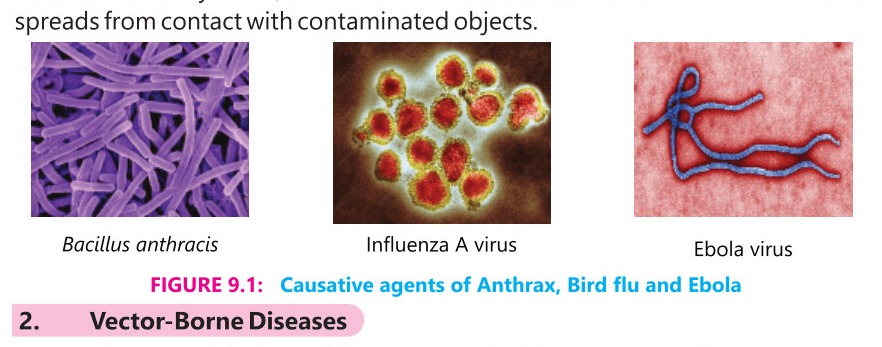
i. Anthrax
• Introduction: It is caused by the bacterium Bacillus anthracis. The infection site may be skin, lungs or digestive system.
• Transmission: Anthrax is transmitted to humans through contact with contaminated animal products (e.g., hides, wool). Usually, anthrax bacteria enter the body through a wound in the skin, by eating contaminated meat or inhaling the spores of bacteria.
ii. Bird Flu (Avian Influenza)
• Introduction: It is caused by influenza A virus. The infection sites include nose, throat and lungs.
• Transmission: Humans get bird flu through close contact with infected birds.
iii. Ebola
• Introduction: It is caused by Ebola virus which targets sites in the body including liver, immune system, and blood vessels.
• Transmission: The virus spreads through direct contact with body fluids, such as blood from infected humans or animals. It also spreads from contact with contaminated objects.
iv. AIDS
i. Some diseases like AIDS, begin as a zoonosis but latter become human-only diseases.
Key Points
Malaria | Dengue Fever | Lyme Disease | Yellow Fever
1. Introduction: These are infections that are transmitted by vectors i.e., living organisms that carry pathogens from one host to another
2. Causes: These diseases can be caused by bacteria, viruses or other parasites.
3. Examples
a. Malaria
i. Causes: It is caused by a parasitic protozoan (Plasmodium).
ii. Effects: It primarily affects liver and then the RBCs. If untreated, it can lead to organ damage.
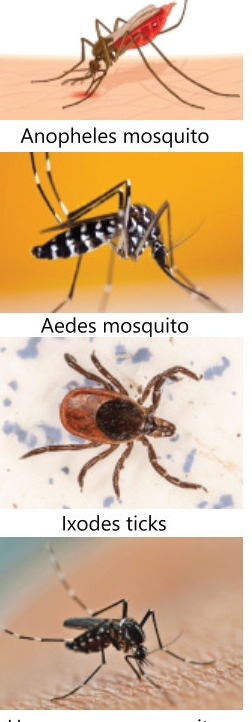
iii. Spreading: It spreads from one human to other through Anopheles mosquito.
b. Dengue Fever
i. Causes: It is caused by Dengue virus that transmits through Aedes mosquito.
ii. Effects: Dengue fever affects multiple organs, including skin, blood vessels, and lymph nodes.
c. Lyme Disease
i. Cause: It is caused by bacteria Borrelia burgdorferi which spread through ticks.
ii. Effects: The infection affects the skin, joints, and nervous system.
d. Yellow Fever
i. Cause: It is an infection caused by yellow fever virus that spreads through Aedes or Haemoggus mosquitoes.
ii. Effects: The infection initially affects the liver, then involves the kidneys, heart, and nervous system.
Key Points
Allergies | Respiratory Allergies | Skin Allergies
1. Allergies
a. Introduction: An allergy is an abnormal immunological response of the body against a foreign substance that's typically not harmful to the body. Such foreign substances which cause allergies are called allergens.
b. Examples: Common allergens include pollen, dust mites, certain foods, insect stings, and certain medicines.
c. Immune System's Response to Allergens: The immune system's response to allergens involves the release of inflammatory chemicals such as histamine. It results in symptoms that affect the skin, respiratory system, digestive system, and cardiovascular system.
d. Types of Allergies: The following are the major types of allergies.
2. Respiratory Allergies
a. Allergic Rhinitis (Hay Fever)
i. Causes: Caused by airborne allergens like pollen, dust mites etc.
ii. Symptoms: Symptoms include sneezing, itching, nasal congestion, and runny nose.
b. Asthma
i. Causes: A chronic condition where various allergens (ammonia, latex, pesticides, fumes, metal or wood dusts etc.) trigger inflammation and narrowing of the airways.
ii. Symptoms: It leads to wheezing, shortness of breath, chest tightness, and coughing.
3. Skin Allergies
a. Eczema (Atopic Dermatitis)
i. Introduction: Chronic skin condition characterized by itchy, inflamed patches of skin. Several allergens can trigger eczema.
ii. Examples: For example, dust mites, pollen, pet skin flakes, mold spores, certain fabrics, metals etc
b. Contact Dermatitis
i. Introduction: Skin reaction resulting from direct contact with allergens like nickel, latex, or certain plants.
ii. Symptoms: Symptoms include redness, itching, and blisters.
c. Food Allergies (Common Food Allergies)
i. Introduction: Range from mild (itching and swelling) to severe (difficult breathing, loss of consciousness etc.)
ii. Causes: Allergens may be peanuts, tree nuts, shellfish, fish, milk, eggs, soy, and wheat.
d. Insect Sting Allergies
• Venom Allergens: Bee, wasp, and ant stings can trigger allergic reactions e.g., local pain and swelling, hives, and in severe cases, anaphylaxis.
e. Drug Allergies
• Common Drugs Allergies: Range from mild rashes and itching to severe anaphylactic reactions. Allergens may be certain antibiotics aspirin, and Non-Steroidal Anti-Inflammatory Drugs (NSAIDs).
Key Point
Pathogens Spreading
1. Introduction
A pathogen is a microorganism or agent that causes disease in its host. Pathogens include viruses, bacteria, fungi, and other parasites like plasmodium. Each type of pathogen interacts with the body in a unique way, leading to different types of diseases.
2. Spreading
Pathogens can spread to humans through the five main ways i.e., air, food, water, person-to-person contact, and bites of animals The following table lists the types of pathogens.
Key Points Disease caused | Common Transmission Method
Table 9.1 Types of Pathogens
Virus
Influenza Virus – Influenza (Flu) – Airborne droplets Direct contact
Human Immunodeficiency Virus (HIV) – AIDS – Sexual contact, Blood transfusion, Shared needles
SARS-CoV-2 – COVID-19 – Airborne droplets, Surface contact
Bacteria
Streptococcus pyogenes – Strep Throat – Respiratory droplets Direct contact
Mycobacterium tuberculosis – Tuberculosis (TB) – Airborne droplets
Escherichia coli – Food Poisoning – Contaminated food/water
Fungi
Candida albicans – Candidiasis (Yeast Infection) – Fungal growth in warm, moist areas, Direct contact
Tineo pedis – Athlete's Foot – Contaminated surfaces
Aspergillus fumigatus – Aspergillosis – Inhalation of fungal spores
Parasitic Protists
Plasmodium falciparum – Malaria – Anopheles mosquito bites
Parasitic Protists
Giardia lamblia – Giardiasis – Contaminated water Contaminated food
Entamoeba histolytica – Amoebiasis – Contaminated food/water
Note Many invertebrates also live as pathogens. For example; tapeworm and roundworm are invertebrates that live in human intestine and cause infections.
Key Points
Types of Immunity | First line of Defence | Second line of Defence | Third line of Defence
1. Introduction
Immunity is the ability of the body to defend itself against disease causing organisms.
2. Types of Immunity
The following are the types of immunity:
a. Innate Immunity: This type of immunity is present in body by birth. It includes the first line of defence and second line of defence.
b. Acquired Immunity: It is acquired during life time It includes the third line of defence
a. Innate Immunity:
i. First Line of Defence
• Introduction: It is nonspecific defence against any pathogen, regardless of the pathogen's identity It includes the skin and mucous membranes.
• Skin: Skin serves as a physical barrier to pathogens. In addition, the oil and sweat glands present in skin inhibit the growth of many microbes.
• Mucous: Mucous membranes are epithelial tissues that protect the interior surfaces of the body e.g., respiratory and digestive systems, the urethra. Mucous membranes secrete mucus that traps pathogens.
b. Second Line of Defence / Describe the roles of T-cells and B-cells in immunity
The second line is also a non-specific defence.
It includes:
i. Killer Cells of Blood: Killer cells of blood patrol the bloodstream. For example:
• Macrophages develop from monocytes (a type of WBCs). They ingest bacteria and kill them.
• Neutrophils are also a type WBCs.
○ They do phagocytosis (engulfing the pathogen and killing it).
○ They also release killing chemicals on pathogens.
○ They also release network of fibres which bind with pathogens and kill them.
• Natural killer cells are a type of T-lymphocytes. They kill the body cells that are infected by pathogens. They also detect and kill cancer cells.
ii. Protective proteins: Protective proteinss also provide non-specific defences. For example:
• Special proteins form a ring-shaped structure that punctures the membranes of infected cells, causing the cells to die.
• Interferon is another protective protein. It is released by cells infected with viruses. Interferon causes nearby cells to make a protein that helps them resist viral infection.
iii. Inflammation: Infected or injured cells release chemicals called histamines which cause local expansion of blood vessels. It results in heat, redness and swelling. This condition is called inflammation. This response is often strong enough to stop the spread of microbes.
iv. Fever: Fever is also a second line of defence. When macrophages attack the pathogens, they release chemicals called pyrogens in blood. When pyrogens reach the brain, the temperature regulating part of the brain raises the body's temperature above the normal value of 37°C (98.6°F). It results in the rise in body temperature. The higher-than-normal body temperature is known as fever It increases the activity of phagocytes and slows bacterial and viral growth.
c. Third Line of Defence
The third line of defence or acquired immunity is of two types:
i. In active immunity, a type of lymphocytes called B-cells prepare antibodies to kill the pathogen. It may be natural or artificial (vaccination).
ii. In passive immunity, the individual is given antibodies to combat specific microbes. Passive immunity is short-lived.
Key Points
Main Steps of blood clotting.
1. Introduction
Blood clotting, or coagulation, is a process that prevents excessive bleeding when a blood vessel is injured.
2. Main Steps in Blood Clotting
The following are the main steps:
a. Formation of Platelet Plug: When a blood vessel is injured, the exposed collagen fibres activate the blood platelets. Activated platelets adhere to the collagen and the damaged walls of blood vessel. In this way, a temporary "platelet plug" is formed.
b. Blood Clotting Factors: Platelets release special proteins called clotting factors which convert prothrombin (a plasma protein), into thrombin.
c. Formation of Blood Clot: Thrombin converts fibrinogen, another plasma protein, into fibrin strands. Fibrin strands weave through the platelet plug, forming a blood clot.
d. Reduction in the Size of Wound: Platelets within the clot contract and reduce the size of wound. Once the vessel is repaired, A plasma protein breaks down the fibrin mesh, dissolving the clot and restoring normal blood flow
More figures from this unit